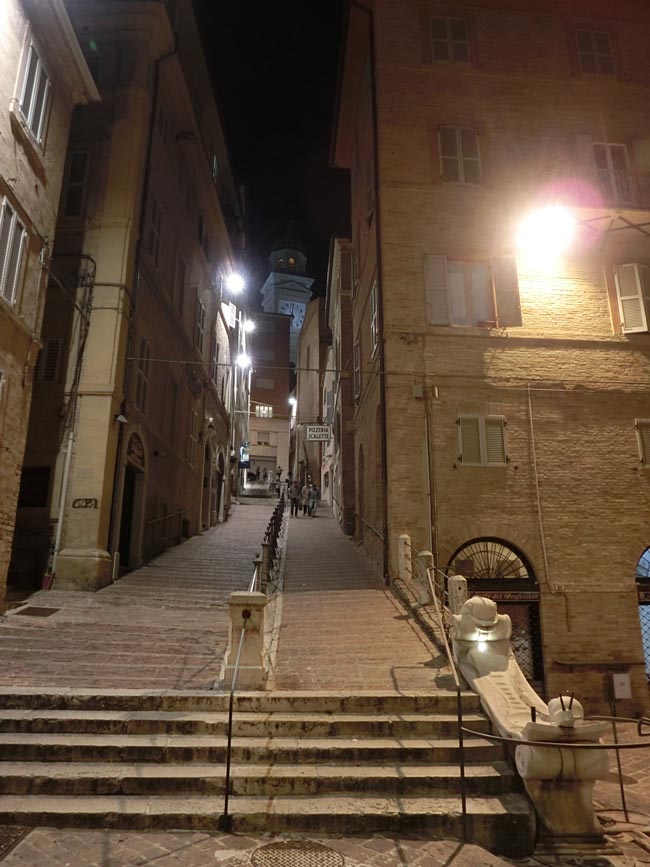
A view of Macerata's historic center from Via Spalato.
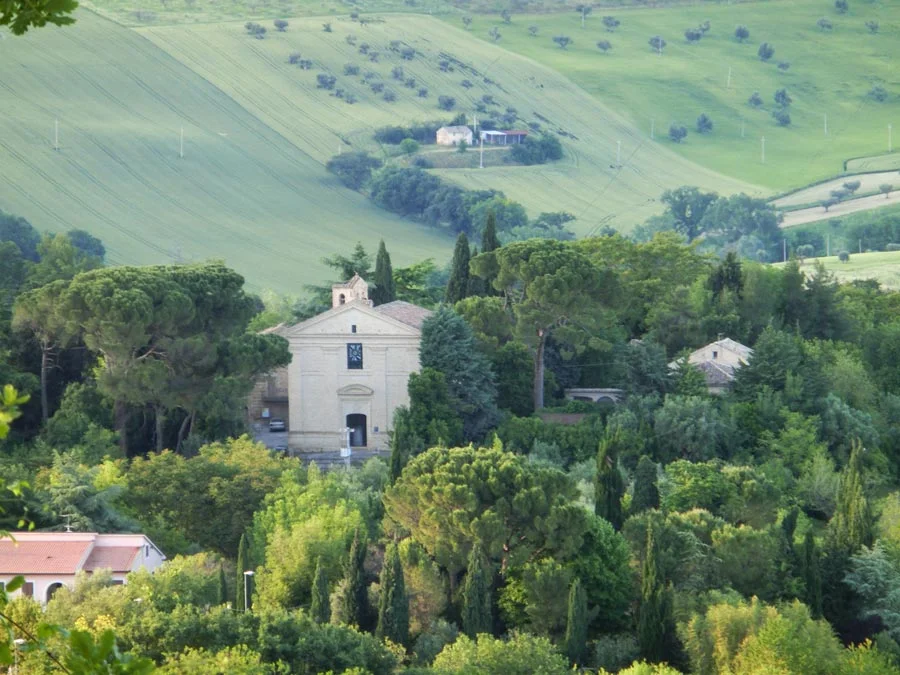
Rolling hills of Le Marche
Chiesa Santo Stefano
A view of the hills toward Ancona
Via Crescimbeni in the rain
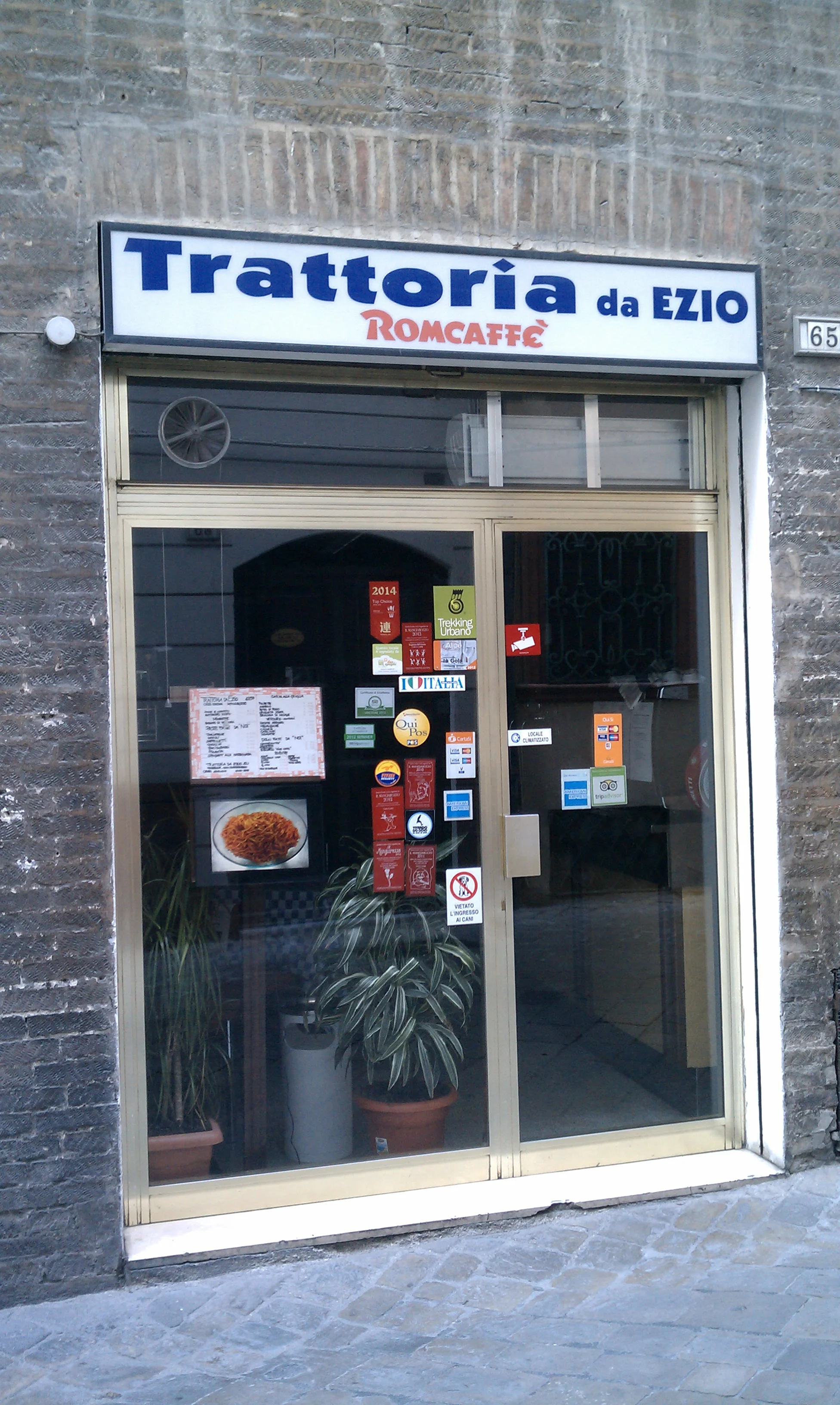
Trattoria da Ezio, a historic family-run restaurant in Macerata.
Trattoria da Ezio interior
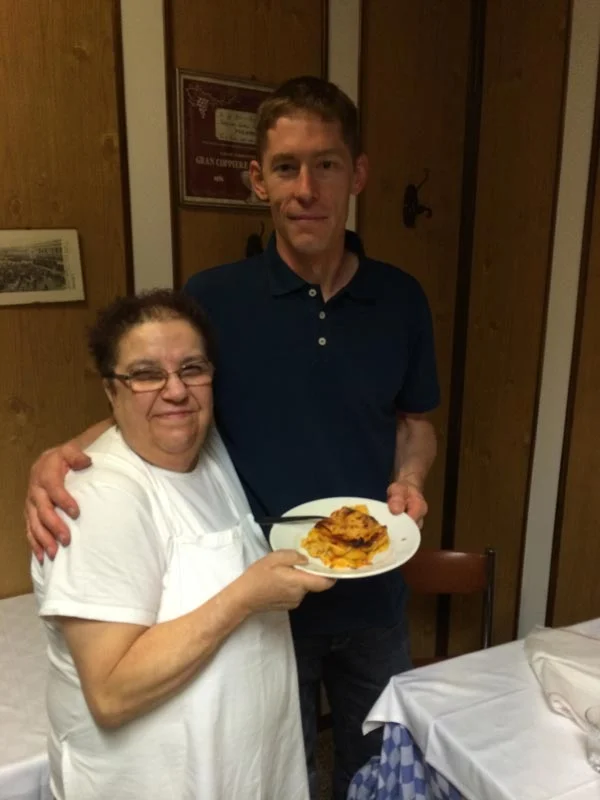
Mirella welcoming me to Macerata
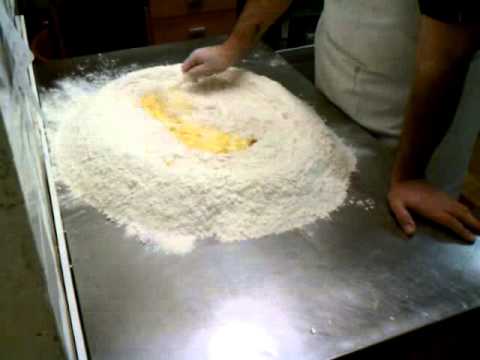
At Trattoria da Ezio, they make pasta fresh by hand, every day, starting with eggs and flour.

The sheets of pasta must dry for at least an hour before cutting them into tagliatelle. They are thin enough to be translucent.
A closeup of the delicate pasta sheet as it dries.
Mirella Lambertucci, owner of the trattoria, rolls out the wide sheets of dough for the tagliatelle, and places them on tables in the dining room to dry.
Marco, Mirella's son and co-owner, cuts the tagliatelle.
Walking around, you see many beautiful doors around Macerata.
Preparing the cappelletti
Cappelletti in brodo. This dish is traditionally eaten at Christmas, with a little bit of red wine and olive oil on top.
At the trattoria, both wine (white and red, both from Le Marche) and water are on tap.
Artichokes (carciofi), ready to be peeled.
Artichokes, ready to be served.
With no space for a garden, some residents hang flower pots out the windows.
A cappuccino, personalized.
A classic version of the famous Fiat 500.
Narrow streets call for adaptation. This is a small delivery truck.
Italians had a long history of producing beautiful automobiles. Here, some classic Alfa Romeos.
Tagliatelle, ready to eat.
Pasta dough that will soon be turned into cappelletti ("little hats"), especially good in broth.
The patio at Palazzo Buonaccorsi, an important museum in Macerata.
A close-up of the recently opened upper wing of the museum at Palazzo Buonaccorsi.
Palazzo Buonaccorsi
Entrance to the Sferisterio, the open-air theater that hosts one of Italy's most important opera festivals every year.
Melanzane (eggplant), ready to go into the oven.
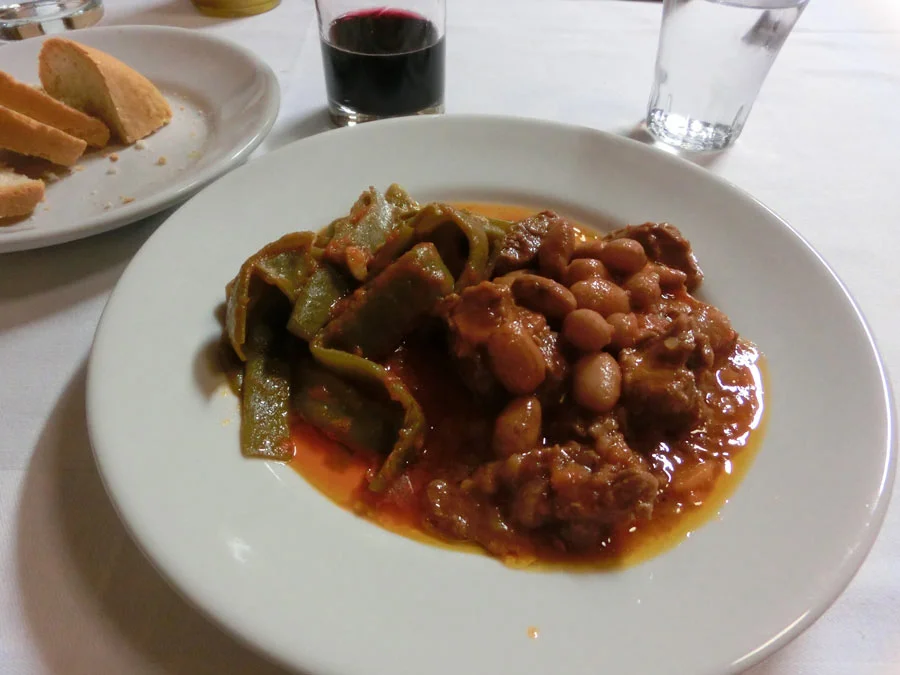
Stewed beef and beans (Spezzatini di manzo con fagioli e fagiolini marconi)
A basement workshop for restoring antiques
Candleabras and a cross to be restored
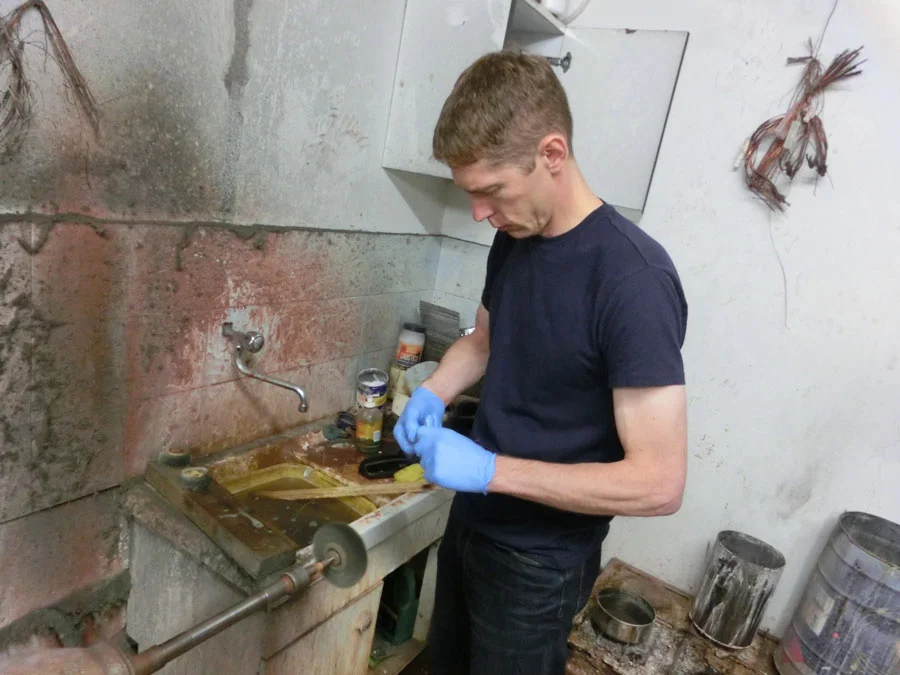
Me getting into the action.
Polishing
The maestro, Gianni, doing the final polish.
After (left) and before (right)
The work is very detailed and requires focus and patience.
Concentration
The nail polish is used to insulate the metal so that when it is dipped in the gold bath, only the exposed parts will be coated.
After ten seconds in the bath, the exposed areas have already turned gold.
Finished project.
Volt, a bull of the Marchigiana breed, wins first place at the Central Italian Agriculture Show. These muscular animals are prized for their meat all over Le Marche.
Cupola of San Giovanni, in the center of Macerata
The Sibilini Mountains, part of the Apenines that run up and down Italy, tower over Le Marche.
A duck that is about to go into a meat sauce. One of the trattoria's specialties is gnocchi con la papera, small potato dumplings with duck ragu.
First, each limb is removed.
Mirella chops the duck carcass in half.
The chopped-up duck goes into a large pot
Next come oil, carrots, celery, and garlic
Add tomatoes and simmer, until it looks like this.
Ricing potatoes for the gnocchi
Riced potatoes
When potatoes are riced, pile on work area.
Add a little flour, and some eggs, then mix.

Gnocchi con la papera
Crostata con marmellata. A sweet dessert (or breakfast) pastry. This one was made with cherry jam.
The crostata, up close.
Involtini di manzo. Hidden inside these beef wraps are a half of a hard-boiled egg, a slice of scamorza cheese, and spinach.
The base for the sauce for vincisgrassi, a local version of lasagna.
Vincisgrassi sauce
A mixture of various meats, also destined for the vincisgrassi sauce.
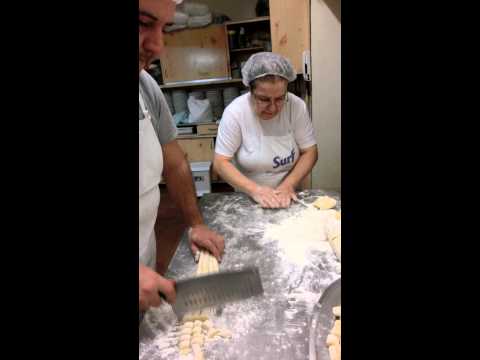
Marco and Mirella roll out the gnocchi
The first time I got to touch the dough for the ravioli that would be eaten at the trattoria.
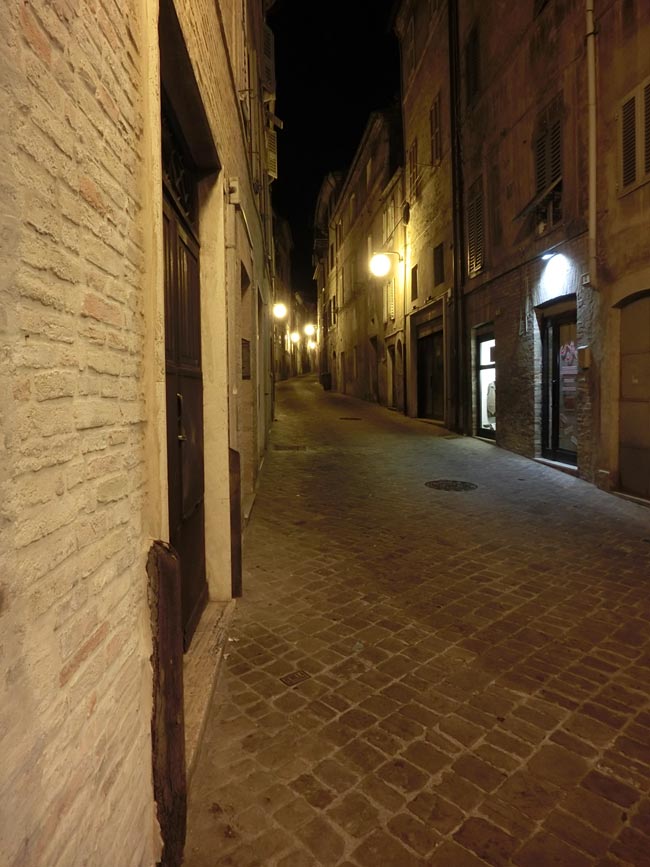
Corso Cavour, at night
A memorial to those fallen in battle.
American students visiting Macerata refer to this as the "Jackson Five" monument.
Parrocchia Dell'Immacolata
An angel statue on top of the Parrocchia Dell'Immacolata
A small side street in the city center.
The main door of Santa Maria della Porta (Saint Mary of the Door)
The long stairs (le scalette) leading up the hill to Piazza Libertà and the Civic Tower.
The main cathedral
San Filippo Neri
San Giovanni, across the piazza from San Filippo Neri
The Macerata skyline
The Civic Tower and the Sferisterio
The Torre Civica, the highest point in the historic center of Macerata